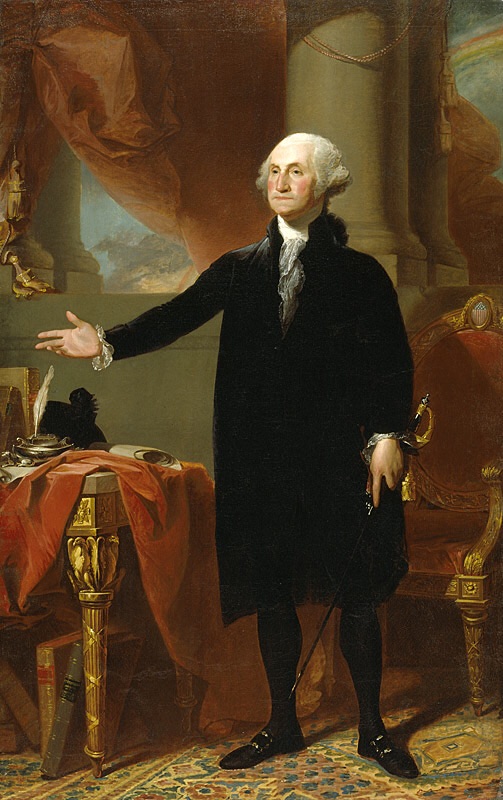
The lost love and the deception and betrayal of George Washington
Before he was a founding father, before he was president, before he was a general in the Revolutionary War, George Washington was a young, romantic-minded man from Virginia.
At the age of seventeen Washington was a young surveyor and kept a diary while on an expedition in Virginia in 1749. The poem about Frances Alexander gives us a glimpse into his young mind, and heart.
A Love Poem
By
George Washington
From your bright sparkling Eyes, I was undone;
Rays, you have, more transparent than the sun,
Amidst its glory in the rising Day,
None can you equal in your bright array;
Constant in your calm and unspotted Mind;
Equal to all, but will to none Prove kind,
So knowing, seldom one so Young, you’l Find
Ah! Woe’s me that I should Love and conceal,
Long have I wish’d, but never dare reveal,
Even though Severely Loves Pains I feel;
Xerxes that great, was’t free from Cupids Dart,
And all the greatest Heroes, felt the smart.
The poem is an acrostic poem which means that the first letter of each line spells out a name… FRANCES ALEXA. It would appear that young George Washington was just four lines from completing his poem to Frances Alexander. Her father, Philip Alexander and his cousin John Alexander were the founders of Alexandria, Virginia.
In the same diary a second poem was penned by George Washington, though it is not known who the inspiration was for this poem.
Oh Ye Gods why should my Poor Restless Heart
Stand to oppose they might and Power
At Last surrender to cupids feather’d Dart
And now lays Bleeding every Hour
For her that’s Pityless of my grief and Woes
And will not on me Pity take
Ile (sic) sleep amongst my most Inveterate Foes
And with gladness never with to Wake
In deluding sleepings let my Eyelids close
That in an enraptured Dream I may
In a soft lulling sleep and gentle repose
Possess those joys denied by Day
Though in later years Washington would become adept at concealing his emotions and feelings, this glimpse into the young heart of the future general and president is a wonderful display of his humanity. However, before he married Martha Dandridge Custis, there would be another potential love interest in the life of George Washington.
Her name was Mary Philipse (silent E). She was an heiress and socialite who was the middle daughter of Frederick Philipse II, 2nd Lord of Philipsburg Manor of Westchester County, New York.
Before the Revolutionary War and the fight for independence from Great Britain, George Washington was a young officer in the Virginia militia. His ultimate goal was to receive an official king’s commission in the British army serving King George II.
In the 1750’s, most colonists were proud members of the British empire. This included young George Washington.
The main antagonists in this period were the French, who argued and fought against the British over who could trade and settle in and around the Ohio Valley region.
In 1755 the British decided they were going to oust the French from the forks of the Ohio River, in particular, Fort Duquesne which sat at the fork of the Ohio, Allegheny and Monongahela rivers.
British Major General Edward Braddock, commander-in-chief of the thirteen colonies during the French and Indian War, was tasked with removing the French from the Ohio Valley.
The 60 year old Braddock brought in young 23 year old Washington as a volunteer guide and aide-de-camp during the campaign. Braddock promised Washington that he will later provide him with an official royal commission into the British army for his service.
Braddock, an old school veteran of European battle tactics, was warned by Washington that they would need to adapt to new fighting techniques against the French and their Indian allies. His warnings went unheeded by Braddock as the campaign neared Fort Duquesne.
Instead of fighting in the accepted traditional customs of European warfare, the French envelop the British column from the front and both sides using the forest for cover in their attack. Most of the British officers were either killed or wounded, including Braddock who was mortally wounded.
Washington wass completely untouched during the battle and assumed command as the British began to flee in disarray and panic. Washington interceded turning it more into a fighting retreat which ended up saving hundreds of his men’s lives.
Though it was a defeat for Braddock, Washington rose as the hero of disastrous campaign. But with Braddock’s death, gone was the promise of a royal commission for Washington.
While he holds the rank of colonel in the Virginia Militia, he was outranked by British officers as they did not recognize colonial rank. This did not sit well with Washington. In fact, in 1756, he traveled to Boston, Massachusetts to argue his case of colonial rank and commissions to the British Governor General.
During his journey to Massachusetts, George Washington made a stop in New York, a city he had never been to. It is there that he met his childhood friend Colonel Beverley Robinson, from a Virginia family that Washington knew. Robinson had moved to New York and married Susanna Philipse, older sister to Mary Philipse. They all lived in a townhouse on Stone Street in what is now the financial district of New York.
Washington met Mary during his stay of nearly a week in the city. In his handwritten financial ledger, Washington noted that he tipped Robinson’s house servants. He also noted that he paid for attendance to the Microcosm Clock and musical exhibit that he attended with ‘the ladies’, implying Mary and Susanna Philipse. So there is actual historical evidence that these events and meetings took place.
While his journey to Boston did not bear fruit, he was not given a royal commission in the British army, Washington did make a several day stopover in New York on his return trip. There are documented expenses of this stopover in his financial ledger and it can be assumed that the visit would be to again see the Robinson’s and Mary Philipse.
The Philipse’s were an extremely rich family. They were the holders of the Philipse Patent, a royal patent for a large tract of land on the east bank of the Hudson River, purchased by Adolphus Philipse in 1697. The vast area consumed some 250 square miles of land originally purchased from Wiccopee chiefs of the Wappinger natives peoples. The area spanned from the east bank of the Hudson River to the then Connecticut colony. The land would be divided among three heirs, one of which was Mary Philipse. This made young Mary Philipse a very attractive candidate to potential suitors, of which there would be many.
Washington had to return to Virginia in March 1756 and was given orders to build a fort along the remote edge of Cherokee territory. Possibly due to being seen as a commoner from Virginia, Washington was relegated to the remote assignment while the rest of the British fought the French in North America and elsewhere.
For many months Washington was posted on this assignment away from Mary Philipse while his repeated requests for leave to go and visit her were abruptly denied by his superiors.
While at the fort, Washington, in an anonymous newspaper article, was accused of being a coward and hiding at the fort while others fight. The article went on to say all the men at the fort were “spendthrifts and bankrupts who have never been used to command while taking part in all manners of debauchery while allowing the natives to destroy homes on the frontier.” This enraged Washington who threatened to resign. He had to receive assurances from the governor and leadership of Virginia that they weren’t behind the personal attack piece before he would consider not resigning. However, those assurances wouldn’t alleviate fears of the Philipse family or others that George Washington wasn’t an appropriate suitor. Clearly someone was trying to damage Washington’s reputation.
Hundreds of years later it would be discovered by investigative journalist Mary Calvi who the enemy of Washington really was back in 1756. Through handwriting analysis, the enemy of Washington turned out to be Lord Loudoun, John Campbell, 4th Earl of Loudoun who was Washington’s commander-in-chief in New York.
Loudoun held a Christmas party in 1756 where wealthy heiress Mary Philipse was the belle of the ball. She had no less that 39 British officers vying for her attention, affections and fortune. At that time, Mary expressed no interest in any of the men trying to court her. Perhaps she was holding out for young George Washington.
One of Washington’s superiors in New York who repeatedly denied him promotions and leave to visit Mary was British Captain Roger Morris. He had served with Washington under Braddock. While in that service, Washington had accused Morris of some infraction and the rift had never been patched up. Now, Morris took advantage of his place in New York and kept Washington on the frontier while he courted Mary Philipse. He became a rival to be taken seriously.
George Washington continued to write to Mary Philipse almost daily. Months passed by going into the winter of 1757 where there were several weeks of no entries in Washington’s diary and his whereabouts were unknown.
A story has been passed down through the Philipse family that at this time, Washington got his leave and made the journey to New York to propose marriage to Mary. He arrived and sat with her throughout the night and in the morning he asked her to marry him. However, he was too late. In his prolonged absence from her, Mary had given up on his returning to her and had already promised herself to persistent suitor, Roger Morris.
In January 1758 Mary Philipse did in fact marry Roger Morris. In the end, George Washington was deceived and betrayed and kept away from Mary by British officers and Morris so that he could court her and win her hand in marriage and her vast fortune.
Morris retired from the British army as a colonel and he and Mary built a mansion estate which they named, Mount Morris. They would live a happy life…for a time.
Anyone who has suffered deception and betrayal is no stranger to the thoughts and desires of revenge or retribution against the perpetrator. It appears that our beloved George Washington is no different from the rest of us.
Within two months of Mary and Roger’s wedding, George Washington was courting a young widow, Martha Custis. While Martha wasn’t quite as rich as Mary, she’s pretty close. She came into the marriage with George Washington with more than 17,500 acres of land as well as several hundred slaves. It seemed that George had done pretty well for himself after all. He gave up his desires of a military career and serving the British empire. He enjoyed life at Mount Vernon with Martha and her children from her previous marriage.
If the story stopped here, it could be seen as one that while fraught with betrayal and bitterness eventually had a happy ending. All parties found their respective partners and enjoyed life. But as we all know, the story didn’t end here. Remember that desire for revenge and retribution I mentioned? Let’s see how all that played out.
The British eventually won against the French in 1763 and Parliament decided to levy taxes against the colonies to make them pay the war debt. Further taxes on tea, the Stamp Act and others would increase the economic tensions between the colonies and the central government in England. Tensions exploded into armed rebellion by the colonists. Those loyal to the crown began to worry that they may become targets of attack.
The conquering suitor of Mary Philipse, Roger Morris, decided things were too violent in the colonies for his liking, so he fled New York leaving his wife Mary and their children behind. Rather than taking his family with him, he thought that they would be safe if he left them in New York.
Just after Morris arrived in England, the Continental Congress tapped George Washington to be the commander of the Continental Army.
As Washington was fighting the British in New York in September 1776, he decided to make his new headquarters in the captured home of loyalist Roger Morris who was now in England. It is easy to imagine the satisfaction George would have felt in taking over Mount Morris, the estate of his former rival. Eventually, after the British took a firm hold of New York, Washington left Mount Morris. Roger Morris would eventually return to loyalist New York to reconnect with his wife Mary. However, marital bliss wouldn’t last too long at Mount Morris.
The rebel-led state legislature in upstate New York passed the Act of Attainder which branded 59 New Yorkers, including Roger and Mary Morris, as traitors, guilty of a felony and forever banished from the state of New York. They were sentenced to suffer death upon capture without the benefit of trial or clergy funeral.
The entire 250 square miles of the Philipse, and Morris, land was seized and auctioned off in parcels. George Washington would not intercede on behalf of the Philipse or Morris family. He had no patience for the loyalists. They had chosen the wrong side and now they would get what’s coming to them. He was not against the seizing and selling of loyalist property.
In a letter to Lieutenant Colonel Reed on April 1, 1776, Washington wrote regarding his despising of loyalists:
“…One or two of them have committed, what it would have been happy for Mankind if more of them had done long ago — the Act of Suicide — By all Accts (accounts), a more miserable set of Beings does not exist than these — taught to believe that the power of G. Britain was almost omnipotent…”
Roger and Mary would flee the colonies for England, the entirety of the Philipse land was gone. Roger would die at 77 in 1794, Mary would die at 95 in 1825, both in York, England.
George Washington would never write about Mary Philipse Morris again, save but for one mention.
On July 10, 1790, President George Washington held a party at the old home of Roger and Mary Morris, Mount Morris which a local farmer had now turned into a popular tavern. Among those joining Washington at the party were Secretary of State Thomas Jefferson, Treasury Secretary Alexander Hamilton, Vice President John Adams along with aides, wives and other family members and friends.
It would have been a multi-course al fresco style event, tables and seating on the north lawn while social and political conversations took place throughout the day as they celebrated the formation of their new nation.
George Washington noted in his diary for this date:
“Dined at the house lately of Colonel Morris’ but confiscated — now in the possession of a common farmer.”
The fact that Washington added the notation that the once renowned rival estate is now owned by a common farmer is one last dig of an insult at Roger Morris and the woman who could have been the first, First Lady of the Untied States of America.
In the end, the man who once wanted to be British so badly, who could hold a personal slight against him to the point of revenge, with all his strengths and weaknesses of being human…was now and forevermore, the symbol of America.
And now you know…the rest of the story.


 Hemingway Ink
Leave a comment